
Rude Songs and Artificial Intelligence

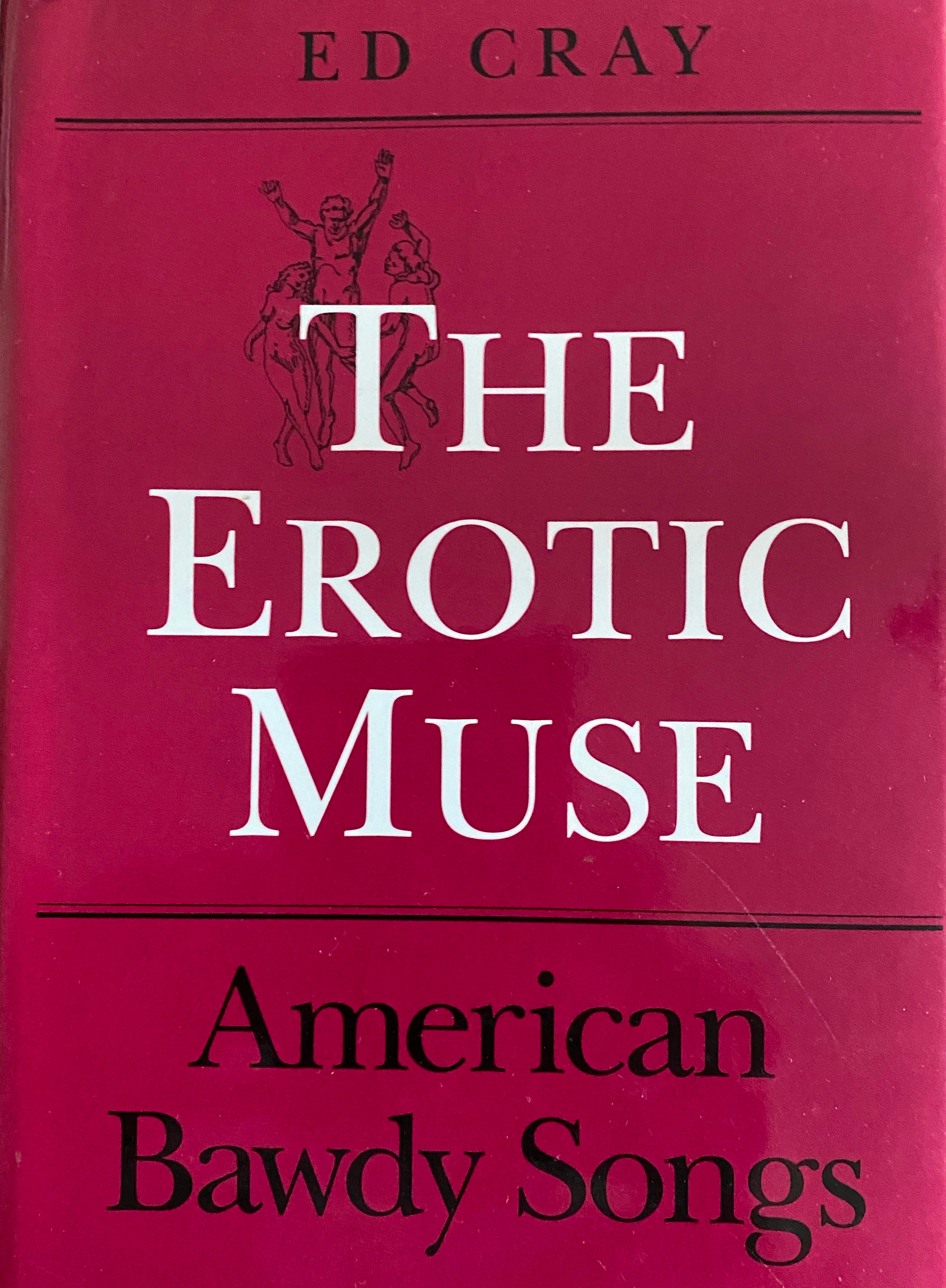
I wrote a short article on Taylor Swift’s song Wood and popular music’s lyrical legacy of rude songs. In researching the topic beyond what I already knew, I stumbled upon Cray’s book on American Bawdy Songs. Cray’s seminal work is a useful historical lens into how ribald humour and innuendo have been embedded in musical traditions for centuries.
I remember as a child in the UK, around ten or so, when I became aware of a class of song in the pop charts that were rude. These songs ranged from Max Romeo’s Wet Dream, a song that was played twice on BBC Radio 1 before being banned. There were others, such as Judge Dread, an English musician known as Alexander Minto Hughes. His record, Big Six1, could be described as a derivative track in response to Prince Buster’s ruder Big Five.
There were, of course, earlier songs. Much like Swift’s Wood, many were a play on words. George Formby’s My Little Stick of Blackpool Rock, which seems innocuous by today’s standards, demonstrates the craft of the double entendre in pre-war Britain. Songs in this tradition, which include Swift’s, rely on shared cultural codes, making them humorous yet socially acceptable.
All of this preamble is intended to provide some context for the rise of GenAI-facilitated rude songs. Many of these GenAI ‘rude’ songs appear to be from a US-based maker, BeatsByAI. The songs are polished in the sense that they are typical of the output from Suno. There’s nothing spectacularly earth-shattering in the music. The lyrics are situational, like Country Girls Make Do, and perhaps have more in common with a comedy skit that tries hard but frequently falls somewhat flat. The lyrics lack a true punchline, which is the craft of the innuendo. Much of the lyrical work suffers from a lack of the double-coding that innuendo or metaphor-driven music demands.
That being said, some songs, like Daddy Has A Secretary hit hard as a document of betrayal and infidelity. This tale of office romances and power imbalances is delivered in the voice of a cutsey child. The juxtaposition and pathos that emerge cannot escape the listener. The choice of a child’s voice simulation perhaps carries the weight, as it were.
It was perhaps outside the scope of Music GenAI companies that they would have anticipated a growth in ribald and bawdy songs. While these songs are presented in all the glory that the current crop of commercial GenAI music production tools are capable of producing, they still fail to entertain beyond a single listen. For example, there aren’t enough laugh-out-loud moments or the potential of shared secret knowledge between writer and listener23.
Despite the technological sophistication, these compositions lack the communal wink—the shared secret—that characterises traditional bawdy humour. GenAI might excel at replication, but it may struggle with cultural innovation sufficiently to move beyond the genre constraints imposed by the human behind BeatsByAI.
The affectation of voice i.e. impersonating a Jamaican accent (read as Black voice), is perhaps more problematic than the lyrical content. However, Hughes is no different from comedians of that time, such as Jim Davidson. And of course, some of the vocal performances in Typically Tropical’s song Barbados, even though they hail from Wales.
I can’t say performer as these tracks lack a sense of performance that could carry the humour of the situation. The machine synthetic voice is humourless.
For example, Alex Harvey’s performance of Jacques Brel’s Au Suivante (aka Next). Monty Python’s Every Sperm Is Sacred from the film The Life of Brian.